

SKU-level deduction data reveals which products, retailers, and dispute codes drive margin leakage. It turns aggregate summaries that hide patterns into actionable root-cause intelligence. Real-time SKU visibility lets AR teams identify invalid chargebacks (shortages, pricing errors, duplicate billing) before dispute windows close, flag operational fixes (supplier issues, labeling violations) to supply chain, and report defensible recovery targets to the CFO. Brands using SKU-level data recover more margin because they dispute the right claims with proof, not estimates.
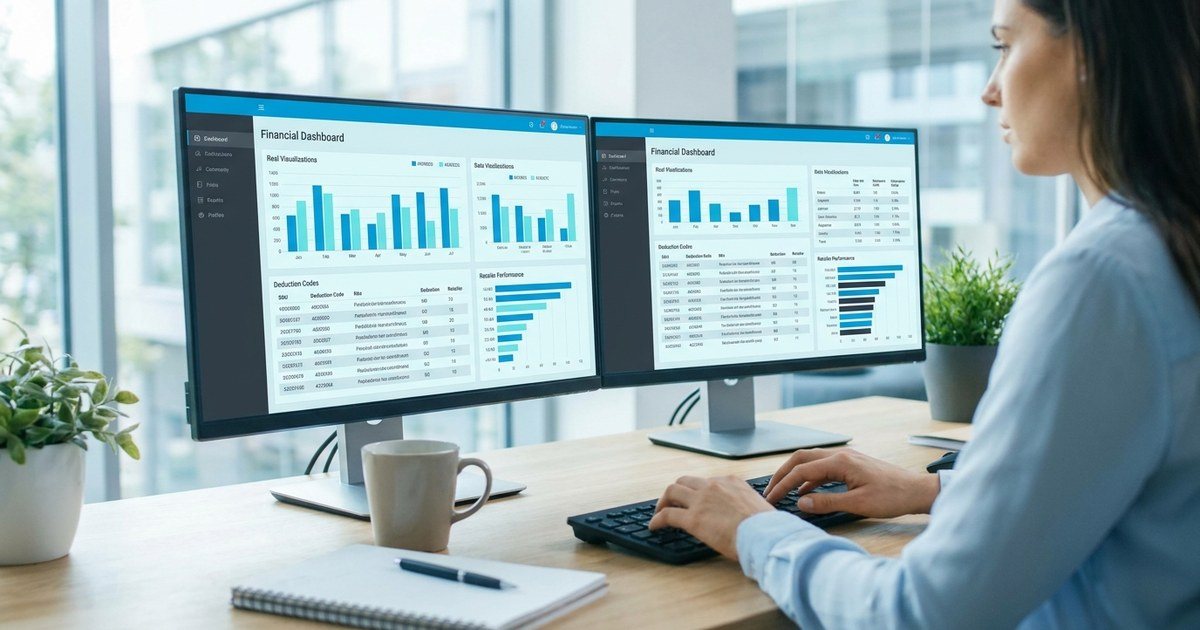
The CFO asks at every board meeting: "How much margin are we losing to deductions?" For most AR Directors at enterprise CPG brands, the answer is a qualified guess. The ERP reports deductions as a single GL line. There is no breakdown showing which SKUs Walmart charged for shortages, which Kroger pricing errors went undisputed, or which Target compliance violations originated in a supplier's packaging line.
Aggregate reporting is a rearview mirror. It tells you the total loss after the dispute window has closed. It cannot tell you which claims to fight today or which operational failures to fix tomorrow. The brands that close that gap share one operational advantage: they see deduction data at the SKU level in real time, before the dispute window closes and before the same root cause generates the next wave of invalid claims.
Why Aggregate Deduction Reporting Leaves You Blind
Invoice-level and account-level deduction rollups hide the signal your AR team needs to act. A monthly deduction balance from Kroger looks normal in a summary report until SKU-level analysis reveals that a large portion is concentrated in a dozen high-velocity SKUs flagged for shortages with no proof of receipt. The rest is valid trade spend: promotional allowances and co-op deductions that cannot be disputed. Without SKU detail, your team codes both categories the same way and writes off the entire balance as cost of doing business.
AR Directors at large CPG companies suspect significant deduction leakage but lack a defensible number to bring to the CFO. They cannot answer three critical questions: which SKUs are being charged, which dispute codes are spiking, and which retailers are issuing claims that should be disputed versus claims that reflect real operational failures. This creates a margin-leakage blind spot. Deductions from major retailers (Walmart, Target, Kroger) erode gross margin by 3 to 8%, and the CFO has no real-time visibility into which SKUs, retailers, or dispute codes are driving the loss.
Month-end close compounds the problem. Controllers are forced to estimate deduction reserves rather than book actuals because deduction balances are unresolved. The AR team is still investigating claims from 60 days ago while new deductions post daily. The CFO reports gross margin to the board with a footnote: "Deduction reserves increased this quarter; final impact pending dispute outcomes."
Structured data paired with intelligent tagging improves operational efficiency by surfacing patterns that aggregate views miss. The brands that can report deduction exposure by SKU, retailer, and dispute code in 72 hours close with real numbers, not estimates. This supports broader deduction management best practices that rely on retail data analytics and invoice accuracy for margin recovery.
What Real-Time SKU-Level Data Actually Shows You
SKU-level deduction data breaks the aggregate into three dimensions that AR teams can act on: product, dispute code, and retailer. Each dimension surfaces a different recovery or prevention opportunity.
Product dimension. Which SKUs are being charged, and whether the claim is valid or a retailer system error. A beauty brand sees units of a specific SKU charged as a shortage by Ulta. SKU-level tracking shows the claim maps to a particular lot shipped four weeks ago. The AR team pulls the proof of delivery, confirms the units were received, and disputes the deduction within the 30-day window. Without SKU detail, the shortage claim would have been aggregated with hundreds of other deductions and written off.
Dispute code dimension. Which chargeback types are spiking (shortage versus pricing versus freight versus compliance), and whether the spike reflects a systemic issue or isolated retailer errors. A CPG brand selling through Kroger sees pricing deductions increase month-over-month. SKU-level data reveals the spike is concentrated in five SKUs tied to a promotional price that expired but is still being applied in Kroger's system. The AR team disputes with the current trade agreement and recovers margin in days.
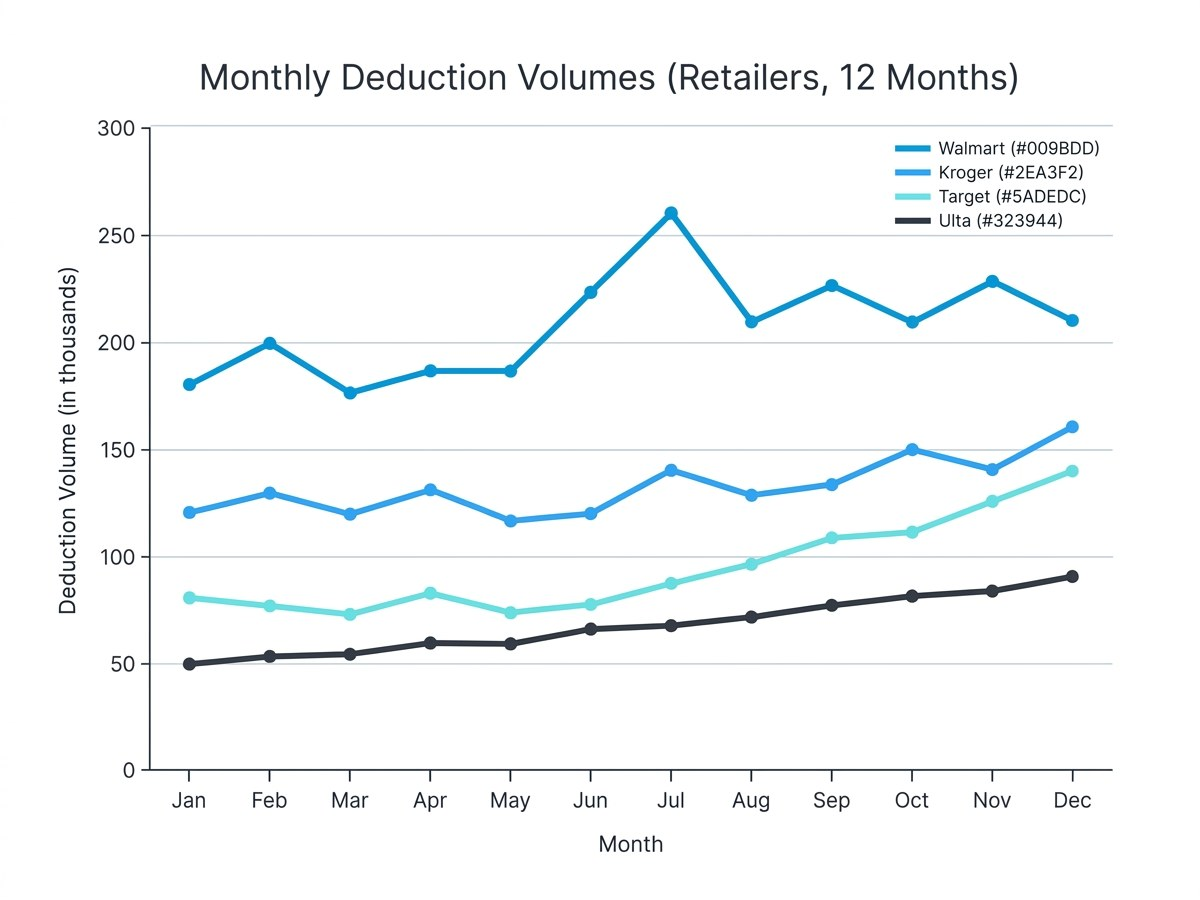
Retailer dimension. Which portals are issuing claims at what velocity, and whether dispute win rates vary by retailer. Walmart accepts proof-of-delivery documentation at high rates when submitted within 15 days. Target requires additional freight bills of lading and has different acceptance patterns for shortage disputes. SKU-level data by retailer lets AR teams tailor dispute strategies to each portal's evidence requirements and dispute windows instead of applying a one-size-fits-all process that leaves money on the table.
For supply chain directors managing compliance chargebacks (late shipments, label violations, EDI errors), SKU-level deduction data becomes a corrective-action feed. A grocery retailer issues a compliance deduction for routing violations on units of a specific SKU. SKU-level tracking reveals the claim originated from a distribution center that consistently flags shipments from a particular supplier. The supply chain team investigates and discovers the supplier is using non-compliant pallet configurations that trigger automated routing failures. The fix prevents the next wave of compliance chargebacks on the same SKU family. This approach transforms deduction prevention strategies into operational intelligence instead of just financial cleanup.
How SKU-Level Visibility Stops Leakage Before Dispute Windows Close
Real-time SKU visibility flags invalid deductions within 24 to 48 hours of posting while the dispute is still open and the supporting documentation (proof of delivery, trade agreements, freight bills of lading) is still accessible. Compare that with the manual status quo: by the time a deduction is coded in a spreadsheet, investigated across teams, and escalated to a decision-maker, 30 to 60 days have passed and the retailer dispute window has closed.
A CPG brand selling through Walmart processes thousands of deductions per month. Under aggregate reporting, the AR team codes claims in batches every two weeks, prioritizing high-dollar invoices first. Low-dollar SKU-specific chargebacks (shortage claims, pricing errors) are coded last and frequently written off because the dispute window expires before investigation is complete. SKU-level alerting changes the sequence: the platform flags every shortage and pricing deduction within 48 hours, routing the claim to the AR specialist with the SKU history, proof of shipment, and current trade agreement already attached. The specialist disputes or approves the claim in minutes instead of days.
For O2C managers whose teams manually process distributor invoices and chargeback claims, SKU-level alerting creates a scale advantage. The same team that could handle 500 deductions per month under spreadsheet-based workflows now processes 1,500 with no added headcount. SKU-level data in a unified platform eliminates the manual stitching step. One view from PO to cash means the deduction that posts on Monday is matched to the shipment from three weeks ago by Tuesday, and the dispute is filed by Wednesday.
Controllers benefit from this speed because deduction balances resolve faster. Instead of estimating reserves at month-end close, they book actuals based on real dispute outcomes. This removes a major source of margin uncertainty from the CFO's quarterly reporting cycle.
Turning SKU Data Into Root-Cause Prevention
The strategic win of SKU-level deduction data is cross-functional intelligence. SKU-level deduction patterns reveal why chargebacks happen, not just which ones to dispute. This is where deduction data stops being a finance-only problem and becomes operational input for supply chain, sales, and procurement.
For supply chain. Compliance deduction data (shortages, routing violations, label errors) by SKU flags supplier issues, packaging defects, or distribution center shipping errors before they compound. A retailer issues a shortage claim on units of a specific SKU. SKU-level tracking shows the claim maps to a lot from a particular supplier responsible for three other shortage claims in the past 60 days on different SKUs. The supply chain team triggers a supplier quality review, discovers inconsistent case-pack counts, and implements a receiving audit at the supplier's facility. The fix prevents the next wave of shortage claims across multiple SKUs sourced from that supplier.
For sales and National Account Managers. SKU-level deduction history by retailer helps NAMs arrive at buyer meetings with data, not complaints. A NAM managing the Kroger relationship sees invalid shortage claims posted over the past quarter on the brand's top SKUs. Instead of escalating the dispute to the account level and risking the buyer relationship, the NAM brings SKU-level proof to the quarterly business review: "Your portal issued shortage claims on these items. Here's the proof of delivery for each. Let's fix the ASN-to-receipt matching issue together so we're not disputing the same SKUs next quarter." This protects the relationship while recovering margin.
For finance and the CFO. SKU-level deduction data answers the CFO's two-part question: "Where is the margin leak?" and "What's the ROI of fixing it?" A CFO reviewing gross margin sees erosion quarter-over-quarter. Aggregate deduction reporting shows an increase in retailer chargebacks but no detail on cause. SKU-level analysis reveals that the increase is concentrated in specific SKUs across three retailers (Walmart, Kroger, Target), all flagged for pricing errors tied to an outdated promotional agreement that finance thought had expired. The CFO now has a recoverable target, a root cause, and an ROI case for fixing the upstream issue. This is the margin-leakage visibility that authoritative brand voices on CPG deductions and margin recovery emphasize in their LinkedIn content and webinars focused on where AI helps and hurts deductions recovery for major retailers.
What to Do With SKU-Level Data: A Practical Checklist
Adopting SKU-level deduction intelligence is an operational shift, not just a reporting upgrade. AR and O2C teams that move from aggregate summaries to granular data follow a similar implementation sequence.
1. Audit your current reporting granularity. Can you answer "Which 10 SKUs drove the most deduction dollars last month?" and "What dispute codes were used?" in under five minutes? If your system requires exporting data to Excel, pivoting by SKU, and manually coding dispute types, your data is too coarse.
2. Prioritize high-velocity SKUs first. Focus on your top revenue-driving SKUs and the products with the highest deduction volume. A CPG brand with hundreds of SKUs typically sees the majority of deduction dollars concentrated in a subset of items. Focusing SKU-level analysis on that subset delivers immediate ROI without overwhelming the AR team.
3. Map deduction codes to disputable versus non-disputable categories. Not every chargeback is recoverable. SKU-level data helps you distinguish invalid claims (shortages without proof, pricing errors, duplicate billing) from valid trade spend (promotional allowances, co-op deductions, contractual discounts). Brands that map dispute codes by recoverability increase dispute win rates because they stop filing disputes on valid deductions and focus effort on claims they can win with documentation.
4. Share SKU deduction patterns with supply chain and sales. Make it a standing agenda item in monthly operations reviews. Finance presents the top SKUs by deduction volume, broken out by dispute code and retailer. Supply chain identifies which codes (shortage, compliance, freight) reflect upstream operational issues. Sales identifies which retailer-specific patterns can be escalated to the buyer relationship for joint resolution. Cross-functional visibility turns deduction data into preventive intelligence instead of post-mortem cleanup. This approach supports invoice accuracy initiatives and helps NAMs bring data to buyer meetings rather than complaints, protecting shelf access while recovering margin.
5. Establish a dispute SLA tied to SKU-level alerting. If a claim can be flagged within 48 hours of posting, set a seven-day investigation and dispute target to stay inside the retailer window. Walmart's standard dispute period is 15 days from deduction posting. Target allows 30 days for shortage claims but only 10 days for pricing disputes. SKU-level alerting makes those SLAs achievable because the AR team receives the claim, the supporting documentation, and the dispute recommendation in a single workflow. Working with the platforms and experts your team already trusts.
Conclusion
Aggregate deduction reporting tells you the total margin lost after the dispute window has closed. It cannot tell you which SKUs to fight for today or which operational failures to fix tomorrow. SKU-level data surfaces the product, retailer, and dispute code patterns that AR teams need to stop leakage now and prevent it next quarter.
AR Directors who adopt SKU-level intelligence move from retroactive dispute firefighting to proactive margin protection. They recover more this quarter because they dispute the right claims with proof before windows close. They prevent leakage next quarter because they share SKU deduction patterns with supply chain and sales, turning chargeback alerts into root-cause corrections. The CFO gets a defensible number backed by SKU and retailer breakdowns. The AR team gets the ammunition to dispute invalid claims without adding headcount. Supply chain and sales get actionable fixes that prevent the same failures from compounding.
Want to see your SKU-level deduction exposure in 72 hours? Talk to Valence Intelligence to run a free leakage analysis and get a real dollar figure with no strings attached.

